One Century of
American Aviation
An independent educational archive celebrating the engineering legacy, historical milestones, and technological innovation of one of the world's most consequential aerospace companies.
What is Boeing Heritage Hub?
An independent educational platform dedicated to preserving and sharing knowledge about Boeing's century of contribution to aviation history, aerospace engineering, and human flight.
Important Disclaimer — Independent Educational Website
Boeing Heritage Hub is a fully independent, non-commercial educational resource. We are not affiliated with, endorsed by, or connected to The Boeing Company in any way. We do not sell products, merchandise, or any commercial goods or services. No transaction of any kind is possible through this website. All Boeing trademarks, model designations, and corporate names are the intellectual property of The Boeing Company and are referenced here solely for educational and informational purposes under fair use principles.
Boeing Heritage Hub was created for aviation enthusiasts, history students, aerospace professionals, and curious minds who want to understand the full scope of Boeing's contribution to modern aviation. From the Model C seaplane of 1916 to the 787 Dreamliner and beyond, this site documents the aircraft, the engineers, the decisions, and the moments that shaped how the world flies.
Our content draws on publicly available historical records, declassified documentation, aviation industry publications, and official Boeing corporate history materials. We present this information in an educational format designed to be accessible to readers at every level of technical background — from those encountering aviation history for the first time to specialists seeking detailed technical context.
We are not a commercial platform. There are no products for sale, no advertising partnerships with Boeing or its subsidiaries, and no commercial motivation behind any content on this site. Our editorial independence is complete. Where we discuss Boeing's challenges and controversies — and they are significant — we do so with the same honesty we bring to its achievements.
A Century of Flight — Key Milestones
From a Seattle boathouse to the most complex manufacturing operation in human history — the story of Boeing is the story of modern aviation itself.
Pacific Aero Products Company Founded
William E. Boeing, a timber merchant with a pilot's licence and an engineer's instincts, founds Pacific Aero Products Company in Seattle, Washington, on July 15, 1916. His first aircraft — the B&W Model C seaplane, built with partner George Conrad Westervelt — demonstrates that he could build a better aircraft than the ones he had flown. Within a year, the company is renamed The Boeing Airplane Company.
The Boeing Model 40 and the Air Mail Revolution
Boeing wins a US Post Office contract to carry airmail between Chicago and San Francisco with the Model 40A. To make the economics work, Boeing begins carrying passengers — two at a time — in a small enclosed cabin behind the mail hold. This marks one of the earliest instances of scheduled commercial passenger aviation in the United States, and Boeing Air Transport is born, the direct ancestor of United Airlines.
The Model 307 Stratoliner — First Pressurised Airliner
The Boeing Model 307 Stratoliner becomes the world's first pressurised commercial aircraft, allowing flight above 20,000 feet and above the weather systems that made earlier air travel turbulent and uncomfortable. Only ten are built, but the technology pioneered here — a circular pressurised fuselage, engine superchargers adapted from the B-17 bomber — establishes the template for every pressurised aircraft that follows.
The B-29 Superfortress — Strategic Bombing at Scale
The Boeing B-29 Superfortress enters service with the United States Army Air Forces. With a pressurised cabin, remote-controlled gun turrets, and a range exceeding 5,600 miles, it represents the most advanced bomber of the Second World War. The B-29 Enola Gay and Bockscar carry out the atomic bomb missions over Hiroshima and Nagasaki in August 1945. Whatever one's view of those decisions, the aircraft itself represents an extraordinary engineering achievement under wartime constraints.
The Boeing 707 — The Jet Age Begins
Pan American World Airways operates the first scheduled transatlantic jet passenger service with the Boeing 707 on October 26, 1958. The 707 shrinks the Atlantic from a five-day ocean crossing to an eight-hour flight. Within a decade, jet travel has transformed global commerce, diplomacy, and tourism in ways that no previous technology had managed. Boeing's decision to fund the 707's development largely from its own resources — a gamble of extraordinary magnitude — defines the company's approach for the next generation.
The Boeing 747 — Democratising Long-Haul Flight
Pan Am introduces the Boeing 747 on the New York to London route on January 22, 1970. The 747's double-deck configuration, capable of carrying up to 660 passengers, effectively ends the era of ocean liner travel and makes long-haul flight economically accessible to the middle class for the first time. Joe Sutter's engineering team designs the aircraft in just 28 months — an achievement so compressed that the engineers who worked on it called themselves "The Incredibles."
Merger with McDonnell Douglas — The Industry Consolidates
Boeing completes its merger with McDonnell Douglas, creating by far the largest aerospace and defence manufacturer in the world. The combined entity inherits the DC-series aircraft programme, the F-15 and F/A-18 military aircraft lines, and the complex cultural challenge of integrating two very different engineering organisations. Some aviation historians argue this merger begins a long-term shift in Boeing's priorities from engineering excellence toward financial performance that has consequences for decades.
The Boeing 787 Dreamliner Enters Service
All Nippon Airways operates the first commercial flight of the Boeing 787 Dreamliner on October 26, 2011, three years behind its original schedule. The aircraft represents a genuine technological leap: 50% of its structural weight is composite material, it uses electric rather than pneumatic systems for cabin pressurisation, and it offers passengers higher cabin humidity, lower cabin altitude, and larger windows than any previous commercial aircraft. Despite a troubled development programme, the 787 becomes Boeing's fastest-selling twin-aisle aircraft.
The 737 MAX Crisis — A Defining Reckoning
Two fatal crashes of Boeing 737 MAX aircraft — Lion Air Flight 610 in October 2018 and Ethiopian Airlines Flight 302 in March 2019, killing 346 people — lead to the global grounding of the entire 737 MAX fleet for 20 months. Subsequent investigations reveal systemic failures in Boeing's safety culture, regulatory oversight, and the design and certification process for the MCAS flight control system. The crisis results in multiple Congressional investigations, criminal charges, multi-billion dollar settlements, and a fundamental reassessment of how commercial aircraft are designed and approved.
The Aircraft That Changed Aviation
From the pioneering jet age to the composite revolution — Boeing's most significant commercial aircraft, examined in depth.
 Legendary
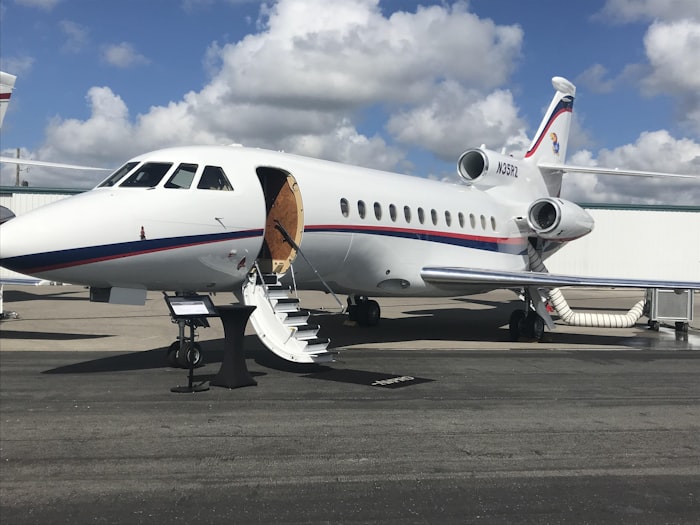
The aircraft that democratised long-haul travel. Designed by Joe Sutter's team in 28 months, the 747 doubled the passenger capacity available on any existing aircraft and fundamentally changed the economics of international aviation. Its distinctive hump — a second deck that runs across approximately a third of the fuselage — was originally intended to carry cargo when the aircraft was eventually retired from passenger service. Instead, it became the defining visual signature of the most recognisable commercial aircraft ever built.
The 747 remained in production for 54 years — longer than any other commercial jet transport. The final 747-8F freighter was delivered to Atlas Air on February 1, 2023, ending an era. More than 1,574 aircraft were built across all variants.
 Revolutionary
The 787 Dreamliner represents Boeing's most ambitious technological departure in the commercial aircraft programme. By constructing the primary structure from carbon fibre reinforced polymer rather than aluminium, Boeing achieved a 20% reduction in fuel consumption relative to comparable earlier aircraft. The composite barrel sections of the fuselage are manufactured in a single piece, eliminating thousands of fasteners and providing a stronger, lighter structure than aluminium panels would allow at equivalent weight.
The cabin experience was redesigned from first principles: higher humidity (15–16% versus the typical 5–8%), lower cabin altitude equivalent to 6,000 feet rather than 8,000, larger dimmable windows, and LED lighting that can be tuned to reduce jet lag on long-haul routes. These passenger-focused innovations reflect the Dreamliner's design brief: to make long-haul flight meaningfully more comfortable rather than merely faster or cheaper.
 Workhorse
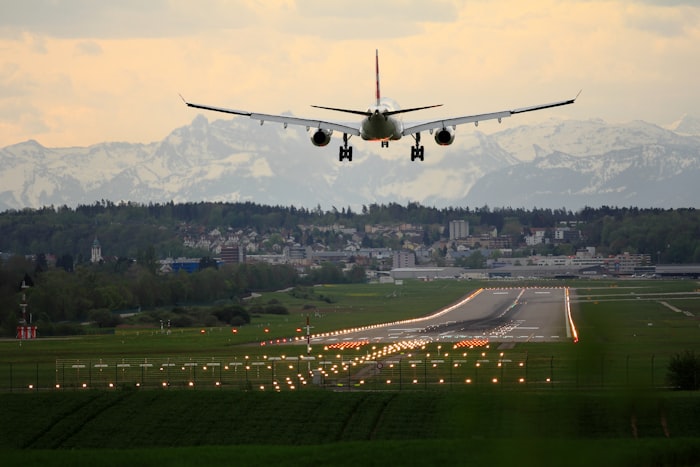
The Boeing 777 holds a unique place in aviation history as the first commercial aircraft designed entirely by computer-aided design tools — no physical mock-up was built before production began. It is also the aircraft that established the economic case for twin-engined aircraft on ultra-long-haul routes, previously considered only viable for three- and four-engined types. The 777-200LR holds the record for the longest non-stop commercial flight: 21,601 km from Hong Kong to London in 2005.
The 777X, with its folding wingtips and composite wings, represents the programme's current evolution. The GE9X engines powering the 777X are the largest commercial jet engines ever built, with a fan diameter of 3.4 metres. When the 777X reaches certification, it will be the world's largest and most fuel-efficient twin-engine commercial aircraft.
 Best-Selling
The Boeing 737 is the best-selling commercial jetliner in history, with more than 10,000 aircraft delivered and thousands more on order. Introduced in 1968 as a short-haul companion to the 707 and 727, it has undergone four major generations of development — Classic, Next Generation, and MAX — while maintaining the fundamental fuselage cross-section of the original design. The 737's remarkably long production run reflects both its commercial success and the enormous complexity of transitioning an established aircraft line.
The 737 MAX crisis of 2018–2019 represents the most significant safety and reputational crisis in Boeing's history. The failure of the MCAS flight control system, combined with inadequate crew training and a flawed certification process, resulted in 346 deaths across two accidents. The MAX was recertified after a 20-month grounding, following extensive software updates and regulatory review, but the crisis has permanently altered public and regulatory discourse around aircraft certification.
Technologies That Redefined Flight
Boeing's engineering legacy extends far beyond airframes — it encompasses materials science, avionics, propulsion, manufacturing, and human factors research that have shaped the entire aerospace industry.
Composite Materials
The Boeing 787 introduced carbon fibre reinforced polymer as the primary structural material for a commercial aircraft — a decision that required entirely new manufacturing processes, tooling, repair procedures, and maintenance regimes. Boeing developed one-piece composite barrel sections for the 787 fuselage, eliminating the thousands of aluminium panel joints and fasteners of conventional construction. The resulting structure is stronger, lighter, and more corrosion-resistant than aluminium, and enables the higher cabin pressure and humidity that make the Dreamliner passenger experience qualitatively different from its predecessors.
Fly-By-Wire Systems
Modern Boeing aircraft use fly-by-wire flight control systems, in which the pilot's inputs are processed by computers that translate them into commands to the control surfaces. This eliminates the mechanical cables, pulleys, and hydraulic actuators of earlier systems, reducing weight and complexity while enabling flight envelope protection features that can prevent certain categories of pilot error. The Boeing 777 was the first commercial aircraft to use a full fly-by-wire system from the outset of design, rather than as a modification to an existing mechanical system.
More Electric Architecture
The 787 Dreamliner replaced the conventional pneumatic bleed-air systems used in all previous Boeing commercial aircraft with an all-electric architecture. Rather than tapping compressed air from the engines to pressurise the cabin and power aircraft systems, the 787 uses large electric generators driven by the engines to power electric compressors and systems directly. This eliminates significant complexity, improves engine efficiency, and enables more precise control of cabin conditions — but required Boeing to solve entirely new problems in electrical system design and heat management.
Computer-Aided Design
The Boeing 777 was the first commercial aircraft designed entirely in computer-aided design software, using CATIA V4 to create a complete digital mock-up of the aircraft before any physical manufacturing began. This allowed Boeing engineers to identify and resolve thousands of interference conflicts between components that would previously only have been discovered during physical assembly. The 777's successful introduction confirmed the viability of paperless aircraft design and established the digital engineering methodologies that now dominate the industry.
High-Bypass Turbofan Engines
Boeing has pioneered the integration of successive generations of high-bypass turbofan engines that have driven dramatic reductions in fuel consumption and noise. The GE9X engines powering the 777X represent the current frontier: with a bypass ratio of 10:1 and a fan diameter of 3.4 metres, they are the world's largest commercial jet engines. Each engine generates more thrust than the entire power output of the original Boeing 747's four JT9D engines combined, while consuming significantly less fuel per unit of thrust.
Production Innovation
Boeing's Everett, Washington factory — the largest building by volume in the world at 399,000 square metres — assembles the 747, 767, 777, and 787 on moving assembly lines inspired by automotive manufacturing. The 787's global supply chain represents a further departure from tradition: major structural sections are manufactured in Japan, Italy, South Carolina, and Washington before being assembled at Everett or North Charleston. This distributed manufacturing model created significant integration challenges during the 787's development but has shaped how complex aerospace products are now produced worldwide.
Boeing in Civil and Military Aviation
For over a century, Boeing has shaped both how civilians travel and how nations defend themselves — often with the same underlying technologies applied to radically different missions.
✈️ Commercial Aviation
Boeing's commercial aircraft division has produced the aircraft that carry the majority of the world's air passengers. At its peak, Boeing and Airbus collectively account for virtually all large commercial aircraft deliveries globally — a duopoly without precedent in any other major manufacturing sector.
The commercial division's history is one of sustained technological ambition punctuated by periods of crisis. The introduction of the 707 created the jet age. The 747 democratised international travel. The 777 proved that twin-engine aircraft could safely and economically fly the world's longest routes. The 787 demonstrated that radical materials innovation could improve the passenger experience alongside operational economics.
- 707 — established transatlantic jet travel, 1958
- 727 — first trijet, dominated medium-haul routes through the 1970s
- 737 — world's best-selling jetliner, 10,000+ delivered
- 747 — democratised long-haul travel, 1,574 built over 54 years
- 757/767 — twin-engine widebody revolution, 1980s
- 777 — established ETOPS operations on ultra-long routes
- 787 Dreamliner — composite revolution, fuel efficiency breakthrough
🛡️ Military Aviation
Boeing's military heritage is as significant as its commercial one. From the B-17 Flying Fortress of the Second World War to the B-52 Stratofortress (still in active service after 70 years) to the F/A-18 Super Hornet and the KC-46 tanker, Boeing has produced some of the most consequential military aircraft in history.
The relationship between Boeing's military and commercial programmes has been deeply symbiotic. The B-29's pressurisation technology enabled the 307 Stratoliner. The B-47 and B-52's swept-wing jet technology directly informed the 707. The military tanker KC-135 and the 707 share a common ancestor in the Dash 80 prototype. Today, Boeing Defence, Space & Security produces attack aircraft, tankers, intelligence systems, satellites, and space vehicles alongside the commercial programmes.
- B-17 Flying Fortress — strategic bomber, WWII backbone
- B-29 Superfortress — first pressurised bomber, Pacific War
- B-47 Stratojet — pioneered swept-wing jet bomber design
- B-52 Stratofortress — in service since 1955, still operational
- F/A-18 Super Hornet — US Navy carrier-based multirole fighter
- AH-64 Apache — primary US Army attack helicopter
- KC-46 Pegasus — next-generation aerial refuelling tanker
Where to See Boeing Aircraft in Person
Aviation museums around the world preserve Boeing aircraft across every era. These institutions offer the best opportunities to experience Boeing's legacy firsthand.
Boeing Future of Flight / Everett Factory Tour
The Boeing Everett factory in Washington State is the largest building by volume in the world, and the factory tour is one of the most remarkable industrial experiences available to the general public anywhere. Visitors observe the final assembly of 747, 767, 777, and 787 aircraft from elevated walkways above the production floor. The scale is genuinely difficult to process: aircraft that appear enormous on any airport apron look almost toy-like when arranged in rows within this structure. Pre-booking is essential — the tours sell out well in advance, particularly during peak season.
Museum of Flight
The Museum of Flight adjacent to Boeing Field in Seattle is among the finest aviation museums in the world and the definitive institution for Boeing's history. The collection includes the original Boeing Red Barn — William Boeing's first factory building, relocated and restored — alongside a comprehensive collection of aircraft spanning the entire history of flight. Notable Boeing exhibits include the original 727 prototype, a 747 used as Air Force One, the first 737 prototype, and Boeing's historic Dash 80 prototype (the aircraft from which both the 707 and KC-135 tanker were developed). A full-size Space Shuttle trainer is also on permanent display.
National Air and Space Museum (Smithsonian)
The Smithsonian's National Air and Space Museum on the National Mall in Washington holds the world's largest collection of historic aircraft and spacecraft. The Boeing collection includes the B-29 Enola Gay (at the Udvar-Hazy Center annex in Chantilly, Virginia — the most visited aviation museum in the world) and numerous historic aircraft spanning the full arc of aviation history. The Udvar-Hazy Center in particular offers the rare opportunity to walk among aircraft in a space that allows appreciation of their true scale, including a retired Concorde and a Space Shuttle Discovery.
National Museum of the United States Air Force
Located at Wright-Patterson Air Force Base, this is the world's largest military aviation museum, and its Boeing military aircraft collection is without parallel. The collection includes examples of the B-17 Flying Fortress, B-29 Superfortress, B-47 Stratojet, and B-52 Stratofortress — a complete survey of Boeing's contribution to American strategic air power across eight decades. Admission is free, making this one of the best-value aviation museum experiences in the world.
RAF Museum & Imperial War Museum Duxford
Two exceptional British institutions preserve significant Boeing military aircraft. The RAF Museum at Cosford, Shropshire, holds a rare B-29 Washington — the RAF's designation for B-29s acquired under the Mutual Defence Assistance Program — one of the very few B-29 variants outside the United States. IWM Duxford in Cambridgeshire maintains a B-17 Flying Fortress in flying condition, one of a handful of airworthy examples that still participates in airshows and commemorative flights, providing one of the most visceral opportunities to experience this aircraft that the twenty-first century offers.
Aviation in Images
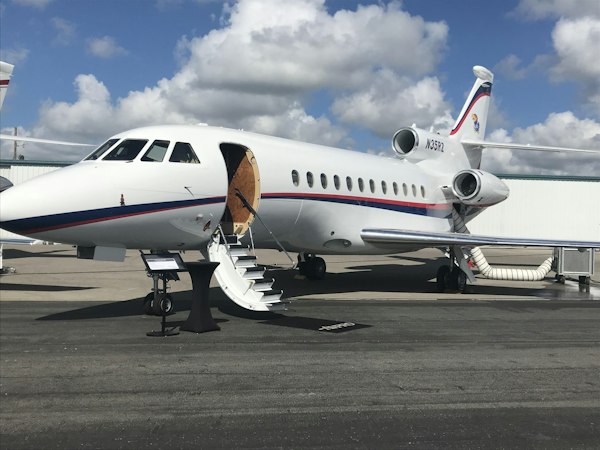
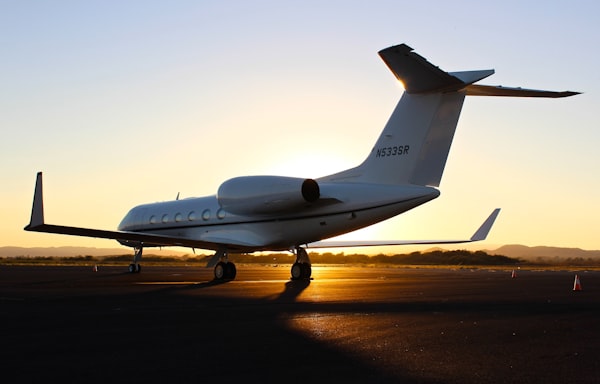
A visual record of Boeing's century — aircraft, factories, and the skies they conquered.

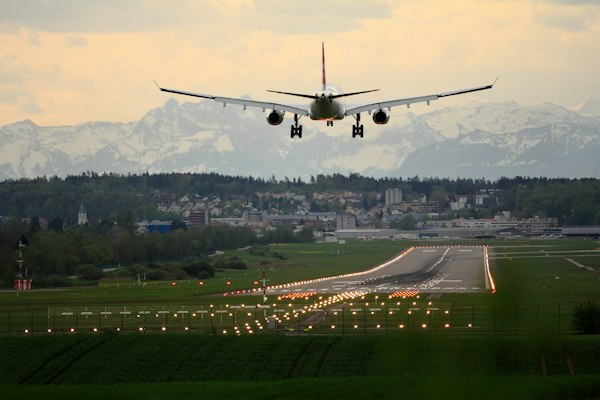

The Future of Aviation by Boeing
Sustainable aviation fuels, electric propulsion, autonomous systems — the challenges facing commercial aviation in the coming decades are significant. Here is where Boeing is focusing its research.
Sustainable Aviation Fuel
Boeing is committed to making its commercial aircraft 100% compatible with sustainable aviation fuel (SAF) by 2030. SAF — produced from waste materials, agricultural residues, and captured carbon dioxide — can reduce lifecycle carbon emissions by up to 80% compared to conventional jet fuel. Boeing has been certifying aircraft on SAF blends since 2008 and has conducted thousands of test flights using various SAF feedstocks. The challenge is scaling SAF production to meet global aviation demand at competitive cost — a problem that requires investment across the entire energy sector, not merely within aerospace.
Electric & Hybrid Propulsion
Boeing's research into electric and hybrid-electric propulsion focuses primarily on short-range and regional aircraft, where battery energy density makes full electrification more feasible than on long-haul routes. Boeing's subsidiary Wisk Aero is developing autonomous electric vertical take-off and landing aircraft for urban mobility applications. For larger aircraft, hybrid-electric configurations — in which electric motors assist conventional turbofan engines during take-off and climb — offer near-term efficiency improvements without requiring the battery density that full electrification demands.
Autonomous Systems
Boeing's Autonomous Systems division is developing the MQ-25 Stingray, an unmanned carrier-based aerial refuelling aircraft for the US Navy — the first autonomous aircraft to be integrated into carrier air wing operations. In the commercial sphere, Boeing's research into automated landing and taxi systems addresses the long-term challenge of pilot shortage projected in aviation forecasts. The ethical and regulatory questions around autonomous commercial aviation are substantial and remain unresolved — but the underlying technology is advancing rapidly.
Frequently Asked Questions
Direct answers to the questions we receive most often from visitors to Boeing Heritage Hub.
Is Boeing Heritage Hub affiliated with The Boeing Company?
No. Boeing Heritage Hub is a fully independent educational platform with no connection to The Boeing Company, its subsidiaries, or any of its official partners. We are not endorsed by Boeing, do not receive information from Boeing beyond publicly available sources, and have no commercial relationship with the company of any kind.
Can I purchase anything through this website?
No. Boeing Heritage Hub does not sell products, merchandise, aircraft models, memorabilia, or any goods or services of any kind. This is a purely educational platform. If you are looking to obtain Boeing-related merchandise, please refer to Boeing's official website or authorised retailers.
Where does your information come from?
Our content draws on publicly available historical records, peer-reviewed aviation history publications, declassified government documents, Boeing's published corporate history, Congressional testimony records, accident investigation reports from the NTSB and FAA, and aviation industry journalism. We cite sources where specific factual claims require attribution.
Why do you include negative information about Boeing, such as the 737 MAX crisis?
Because an educational resource that presents only achievements is not education — it is promotion. The 737 MAX crisis resulted in 346 deaths and revealed serious systemic failures in Boeing's engineering culture, safety oversight, and regulatory relationships. These facts are a significant part of Boeing's history and are documented here with the same seriousness we bring to the company's achievements. Our mission is accuracy, not advocacy.
How can I visit the Boeing factory in Everett?
The Boeing Everett factory offers public tours through the Future of Flight Aviation Center in Mukilteo, Washington. Tours must be pre-booked — walk-up availability is rarely possible. The tours are age-restricted (minimum age 4 years) and require participants to be able to walk approximately 1.3 miles. Photography is not permitted on the factory floor. See the Future of Flight official website for current tour availability and booking information.
What is the best museum to visit for Boeing aviation history?
The Museum of Flight in Seattle, Washington offers the most comprehensive Boeing-specific collection, including the original Dash 80 prototype and historic aircraft from across Boeing's programme history. For military aircraft, the National Museum of the United States Air Force in Dayton, Ohio offers the most complete survey of Boeing's military contribution. Both are within a day's travel of Boeing's primary manufacturing facilities.
Is the Boeing 787 Dreamliner the most advanced commercial aircraft ever built?
The 787 represents the most significant materials technology departure in commercial aircraft history — 50% composite structural weight is genuinely revolutionary. However, "most advanced" is contestable: the Airbus A350 uses similar composite proportions, and both aircraft reflect the current frontier of commercial aviation technology rather than a singular Boeing achievement. The 787's cabin environment innovations — higher humidity, lower cabin altitude, larger windows — represent genuine passenger-experience improvements that are less dependent on any single competitor comparison.
Get in Touch
Questions & Contributions
Have a question about our content, a historical correction to suggest, or an aviation research enquiry? We welcome genuine correspondence from readers, researchers, and aviation enthusiasts.
Note: we cannot assist with Boeing customer service, warranty, or product enquiries — please contact Boeing directly for those matters.
Boeing Heritage Hub
1401 East Marginal Way South, Suite 400
Seattle, WA 98134, United States
We aim to respond within 3–5 business days to all genuine enquiries.